
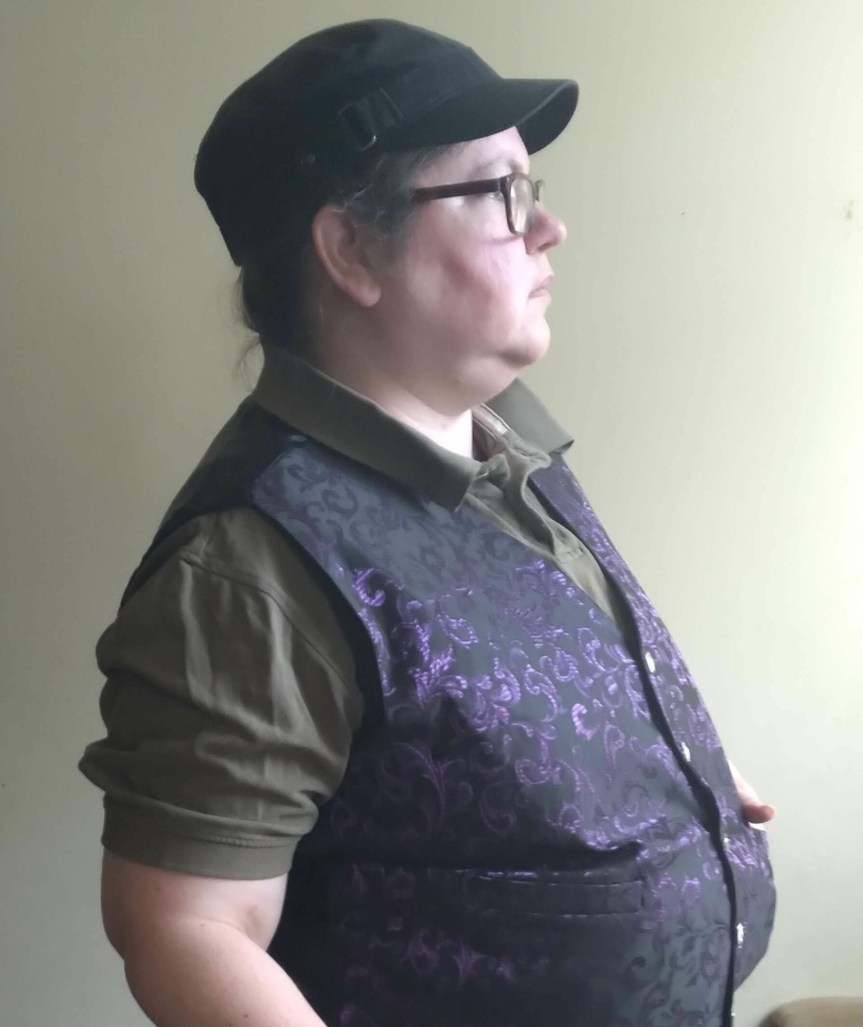
Jess Mahler is a queer neurodivergent author who an enduring love affair with common tropes spends most of her books having fun playing with them (and fucking them up. She stopped by to talk about her upcoming book and her approach to writing.
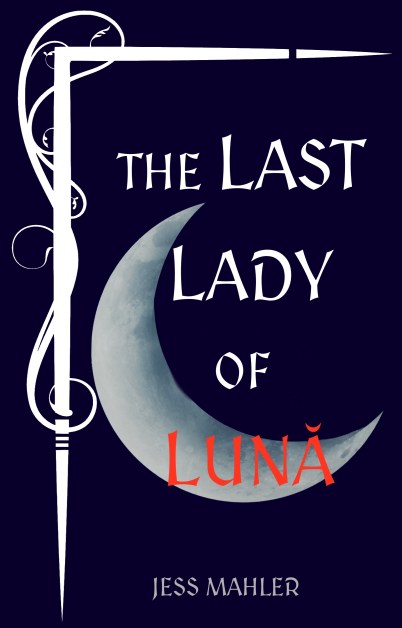
Q) You have a new book coming out in October, The Last Lady of Lună, could you tell us a little about it and what inspired you to write it?
Bear with me, this may be longer than you expected.
I’m aromantic, and specifically a variety of aromantic where for most of my life I didn’t understand romance. Had no clue what made romance ‘romance’. Like, it’s love plus sex, right? So why is it if I have sex with a friend I love, that’s ‘friends with benefits’? What makes friends with benefits different from romance? I had this conversation with multiple alloromantic friends, all of whom crashed at this point.
I did not get it.
In spite of this, I’ve always loved romance novels. Especially ‘why choose’ and queer romance novels and early on when I started writing, I wanted write the kind of romance stories I wanted to read. Except I kept getting comments about how my stories weren’t ‘really’ romance novels.
(Why not? They were love stories with a HEA or HFN. Isn’t that the definition of romance? → Much confused me.)
Eventually, I set myself a challenge: I would set out to mimic the style of a mainstream why-choose romance and see if I could write something that ‘read’ as romance to alloromantic folks.
That was the start of The Last Lady of Lună.
The Last Lady of Lună is about Natalia, a young vampire coming into her powers with some dangerous enemies looking for her. She needs to find human mates who will not only be a source of blood for her, but will also be able to survive what her enemies throw at her.
She thinks she’s found them. Five human mercenaries who she can be happy with and who can survive her life.
Too bad they don’t believe in vampires.
(Ironically, in the course of writing this book, I figured it out. The secret ingredient is passion. Love+sex+passion=romance.)
Q What was the hardest part of writing this book?
Definitely nailing the romance!
Q) Besides your fiction work you also have a series of books on polyamory, what made you decide to put those out?
You know, I don’t remember?
It started as a blog. There was a lot of ‘practical’ stuff about polyamory no one was talking about at the time – stuff like how do you split the housework, or handle a pregnancy, or navigate moving in together. And I started blogging about it. The blog became fairly popular fairly quickly, and at some point I decide to turn the most popular section of the blog – all about pregnancy – into a book.
The rest was history.
Q) How do you handle writer’s block?
Switch to a different project. I always have multiple projects going at once, so if I can’t write, I can edit, if I can’t edit I can cover design or format.
Q) What do you feel is the most challenging part about being an indie author?
Marketing. I really struggle with how best to reach people.
Q) When you are creating a series do you start with the characters or world building first?
I always start with at least a basic concept of the world, even if it’s as simple as ‘typical urban fantasy setting’. For some projects, like Planting Life in a Dying City, I do extensive world building before I start on characters. Characters are shaped and changed by the culture they grow up in, so I need to have at least a rough idea of that culture before I start character building.
Q) what is your next project you are working on?
Do I have to pick one? 😉
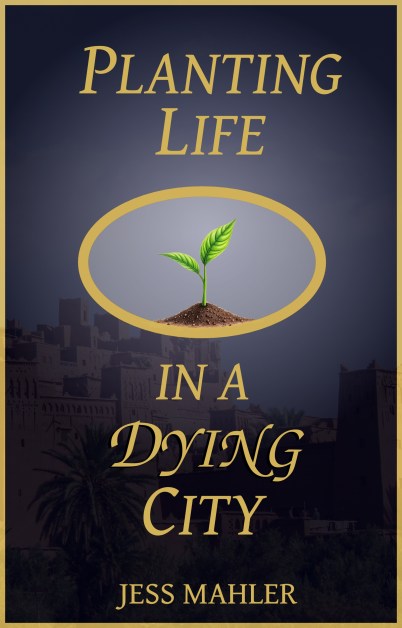
My next project after The Last Lady of Lună is Planting Life in a Dying City. It’s a found family/polyamory story set in a Bronze Age world. A group of people who, for various reasons, end up alone in the world, come together to form a new family and new life together. A friend described it as “this queernormative tale abounds with details ranging from trauma recovery and neurodivergence to winter romance and city politics.”
It’s fully written and going through a last round of edits before I get it ready to publish.
Q) If people want more information about your or your projects, where should they go?
For now, my Ko-fi (https://ko-fi.com/V7V468S0) and Mastodon account (https://indiepocalypse.social/deck/@JessMahler) are the best places to go. They both get daily (or more than daily) updates.
I’m in the middle of re-building my website (https://jessmahler.com) and folks can follow my blog there for new book announcements.
Final four questions –we ask everybody.
Q) When the zombies take over the world where will you be?
Probably dead. Between the asthma that makes it hard to run and the medications I rely on to function, I’m not surviving in most ‘post apocalyptic’ world scenarios.
Q ) What is your favorite Fandom (could be sports, pop culture, favorite director or author)
Hate to admit it, but Batfamily. It is SUCH a problematic media, and I almost never read/watch the canon stuff anymore. (I gave up on the Batman comics when they killed Jason. I still hold a grudge about that. Don’t get me started on the travesty that is the ‘Jason Lives’ short run.)
But I love the Batkids and all the fun and crazy ways fandom re-imagines their interactions. It was the first ‘found family’ fiction I was really exposed to and I love it for that.
Q) What piece of art, be it in the form of music, a book, a film or picture, do you think people must experience before they die?
Something they create themselves. I don’t think there is a single ‘universal’ piece of art that will speak to everyone, but everyone should have the experience of creating art themselves.
Q) Give one fact that most people would not believe about you?
This question stumped me for a while. I don’t think there’s much about me or my life that’s really unbelievable, and I’m pretty open about who I am. I suppose… one thing that seems to consistently surprise people is that I am polyamorous and kinky – and deeply embedded in Jewish faith and culture.
A lot of people see that as a contradiction – how can I celebrate Shabbat every week and keep kosher and still be so non-mainstream in my personal life?
Kind of funny, but it’s the kink that surprises most folks, as if kink were some kind of anti-religion. There is nothing in Judaism that says I can’t be kinky, and nothing in kink that violates or interferes with my observance.
Polyamory is, I’ll admit, a harder one since Judaism does have strict rules about sex outside of marriage. But G-d only expects us to get it right 50% of the time, and I think abandoning my family for my faith would be a greater wrong than continuing with the family I had before I embraced my people and culture.
 Paper Phoenix ink