
Sarah layzell is a writer and editor who focuses on grief, queerness and childhood in her creative and educational projects. She recently put out her debut middle grade book, Cottonopolis. She was nice enough to engage in a conversation about her fiction and non-fiction works.

Q) Could you give our readers an overview of you new novel COTTONOPOLIS?
Cottonopolis (Northodox 2024) is a queer story with a twist of magic. Set in Little Ireland, a notorious slum district of 1840s Manchester, this novel interweaves family, friendship and radical politics with first love. Main character Nellie Doyle is a twelve-year-old mill girl whose life starts to change in small but important ways when she is granted seven wishes by a mysterious circus owner. She makes a new friend, Chloe Valentine, and over the course of their adventures Nellie starts to realise her feelings for Chloe are more than friendship.
Q) Your first young adult novel, COTTONOPOLIS, is set in 1840’s Manchester, Was there a particular reason you picked that time period?
My book is dedicated to “the spindle side” which is a way of saying the maternal line. Nellie is named after Ellen Dolan, my grandmother’s grandmother who lived in Manchester in the late 1800s. But the early 1800s is when Manchester really changes from being a small town to a huge centre of industry centred around the cotton trade. The town started to be known as ‘Cottonopolis’. Living and working conditions were poor and building regulations were non-existent, leading to exploitation, industrial accidents and the emergence of temporary neighbourhoods like Little Ireland.
There are also crossover points with American history, as American abolitionists visited Manchester to speak to the workers and raise support for the anti-slavery cause. I find it a fascinating place and time in history, and one that’s almost always described in negative terms. I wanted to explore the humanity, humour and relationships of the children who lived and worked in this environment.
Q) Most of your projects revolve around grief, queerness and childhood, is there something about these themes that draw you to them?
I am always trying to write the book I needed to read as a child, which in the case of Cottonopolis is a sapphic love story for readers as young as 8. It’s very special that children have read my book but it’s also special to hear from queer adults who say it’s a book they wish they had as a child.
In his collection Feed the Beast, Pádraig Ó Tuama has a poem where he talks about the future version of himself speaking to him through an open window. That’s the voice I’m trying to be for myself and others, and that’s one of the ways I deal with grief and loss and the sense that some crucial part of me wasn’t allowed to exist during my childhood.
Q) Besides being a writer, you also edit other people’s work, has this taught you any things that you applied to your own writing?
Often when I’m reading the first draft of an essay, I’ll get to the conclusion and see a sentence that really needs to be at the start of an essay. I really enjoy that process of changing a piece structured around a writer’s chain of thought into a piece that puts the reader first and gives them the key information or argument they need right from the start.
I also love editing because it helps me see writing as a job and a team effort. It doesn’t have to be this painful perfect thing that can only come from one special person; instead there are constant improvements you can make while still helping the writer’s voice to shine through and knowing when something is good enough.
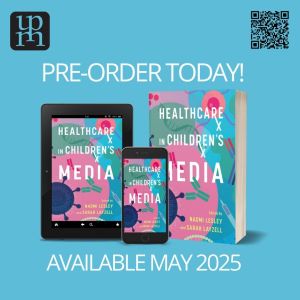
Q) Besides your creative writing output you also have a non-fiction work coming out, Healthcare in Children’s Media, how did that come about?
Back in 2018 I co-hosted an academic panel with Drs Naomi Lesley and Abbye Meyer on healthcare in children’s literature, partly to share our work and partly see if other people were interested in the topic. There was a lot of interest so we pitched the book as an edited collection and we soon had chapter proposals from researchers on topics ranging from dementia in picturebooks to masculinity in Teen Wolf and so much more. Following the Covid-19 lockdowns and in the context of the anti-trans legislative backlash in both the US and UK we also decided to add interviews with practitioners working with LGBTQ+ communities and/or children’s media generated in response to the pandemic. The book is out in May 2025 with University Press of Mississippi.
Q) what is your next project you are working on?
My next creative project is a novel that tells the story of two brothers faced with the environmental destruction of their home. The novel is set in the 1600s and is loosely based on the history of the draining of the English Fens, which is nowadays considered to have been an ecological disaster. The older brother is trying to protect the younger brother from being recruited by rebels who put themselves in danger by sabotaging the drainage works. Also he’s nonbinary and is friends with a mean magical swan.
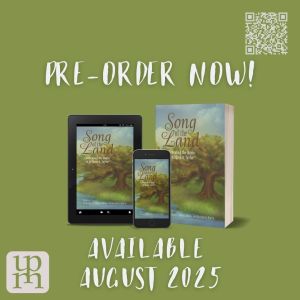
My next non-fiction project is another co-edited collection called Song of the Land: Celebrating the Works of Mildred D. Taylor. I’ve been working with Dr Tammy Mielke and Professor Michelle H. Martin, along with around 20 other contributors, on an essay collection about the great African-American children’s author Mildred D. Taylor who wrote Roll of Thunder, Hear My Cry. That is coming out with University Press of Mississippi in August 2025.
One thing I should say is that academic books are usually expensive, but people can ask their local libraries to stock them or provide access to ebooks where possible.
Q) If people want more information about your or your projects, where should they go?
For creative work: https://sflayzell.com/
For academic work: https://www.upress.state.ms.us/Contributors/L/Layzell-Sarah
I’m also on Bluesky @sflayzell.bsky.social
Final four questions –we ask everybody
Q) When the zombies take over the world where will you be?
Somewhere with loved ones, books, beer, comfy chairs, a nearby lighthouse to keep an eye out for zombie hordes and great views of the sea (can zombies swim?). I’m imagining the fishermen’s reading rooms in Southwold or a similar setup anywhere on the coast.
Q ) What is your favorite Fandom
My girlfriend keeps trying to explain the Supernatural fandom to me and honestly it sounds very intense. Personally I am too fickle for fandom so instead I just have short-term fixations on particular characters and pairings. Currently it’s Jedediah and Octavius, the tiny American cowboy and Roman soldier from the Night at the Museum films.
Q) What piece of art, be it in the form of music, a book, a film or picture, do you think people must experience before they die?
Maria Callas singing “O mio babbino caro”. Alternatively, the version of the aria whistled by Snoopy in the Peanuts cartoon when Peppermint Patty’s tape player breaks during her performance at the figure skating competition.
Q) Give one fact that most people would not believe about you?
According to my high school aptitude test, I should have become an international diplomat. Given my inability to tell lies or tolerate bad behaviour and a complete lack of respect for hierarchy, it probably would not have worked out.
 Paper Phoenix ink