
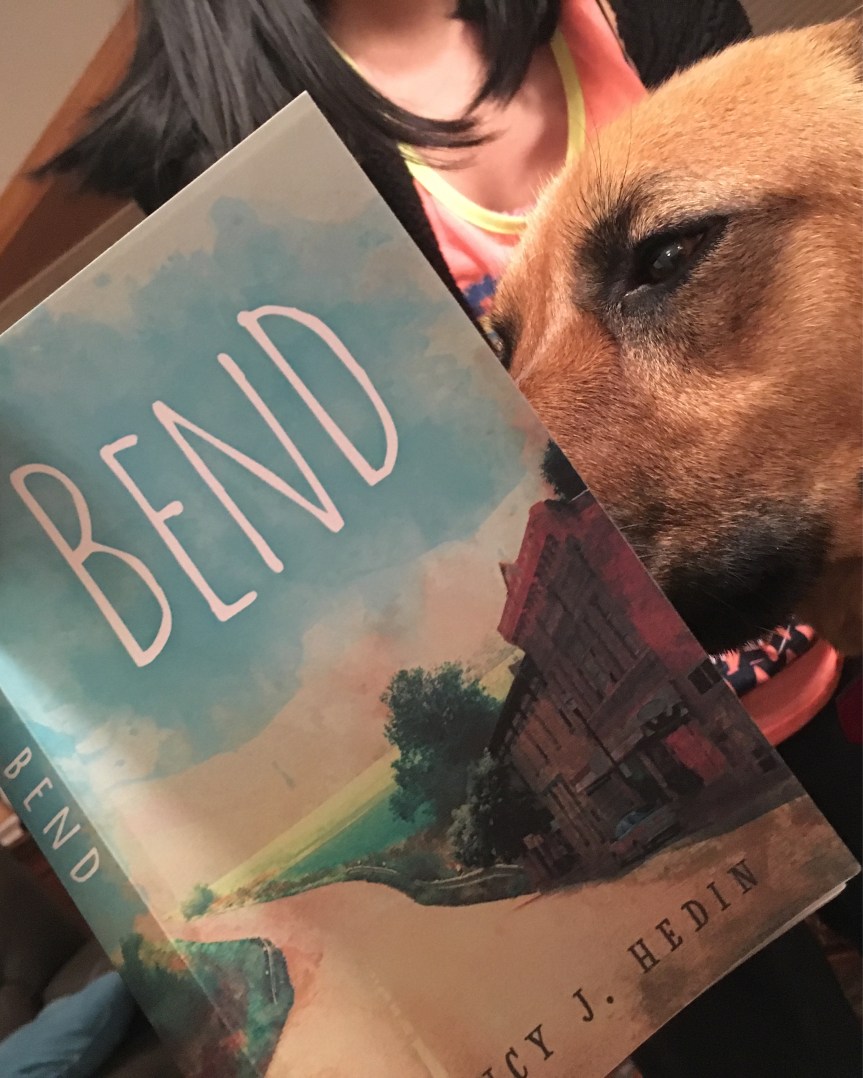
As we approach two weeks straight of showing off talented LGBTQ+ creators. We got to share a moment with Nancy J Hedin. She is a woodworking novelist and former bartender, pastor, stand-up and social worker.
Q) You got a lot of praise for your freshman novel Bend, How did that affect how you approached the next books in the series?
I had always intended for my first novel to be part of a trilogy. Firstly, I was hoping to sell multiple books in a series. Secondly, I wanted to show the character over a longer time period and show their changes. Initially however, I thought the story was going to be about the momma. My early work on the book was labeled the Momma Stories in my computer. As I advanced the story it became clear to me that this was Lorraine’s story.
From the first conception of Bend to its completion two decades passed. I wrote some stories and took some classes at the Loft Literary Center in Mpls. It wasn’t until at age 50 I got a second master’s degree—this time an MFA in Creative Writing from Hamline University—that I learned how to write a novel.
I didn’t immediately know what would happen in the second or third book but I had a clear vision of the ending for Bend. That picture in my mind helped me finish build the story and leave an opening for a second and third book.
Q) What is the biggest challenge you face when sitting down to write a novel?
I joke that all my stories begin with my hearing voices. Partly, that is a tease because I have worked most of my professional career as a mental health crisis worker and I really liked talking to people about their psychosis and experience of hearing voices or seeing or feeling things other people were not experiencing. I think voices have purpose in our lives and sense of meaning.
My novels have all began with me hearing the character speaking to another character or themselves. The challenge is figuring out where the story goes from that initial conversation. For me, the writing comes pretty easy. It’s the selling that’s hard. I have about fifteen novels written and just five that have been purchased by presses. I have the task of convincing my agent and then a publisher to take a chance on my story. It is a challenge to not be discouraged when my work doesn’t find a home and when I only measure my work in terms of sales. That said, I will keep telling stories.
Q) You have been a pastor and bartender, a stand-up comic and a mental health crisis worker, how do you think all these experiences have shaped your writing?
I’m comfortable with complexity in people. I don’t see people as all good or bad. The drive for connection to others and humanity of making mistakes and having regrets interests me. I’ve been given the honor of hearing people’s stories during very vulnerable times in their life. I don’t take that lightly. These are the things that connect us to each other and the divine. I want to tell stories about people who are flawed but well-intended. I believe in redemption for people.
Q) A lot of your books take place in Bend, a small town in Minnesota, what do you think is different and the same about stories that occur in a small town from those that happen in a big city?
My bias is that it is harder to be anonymous in a small town. Being different or in my case queer, was not a readily accepted way to be in the sixties and seventies in small town Minnesota. It still isn’t for many people. I didn’t know what to call what I was but I knew from an early age that I loved women and I had better not admit that to anyone.
When I came out to my mom when I was in my twenties she cried and asked if I had seen a psychiatrist. My dad said, “Oh, don’t be that.” One brother said that I had taken away some of his best jokes.
A high school classmate came to one of my readings at a Barnes and Nobel bookstore in St. Cloud, MN. When I was answering questions after the reading, I asked her if she knew I was lesbian in high school and she said, “Oh yes.” I asked her, “Why didn’t you tell me?”
I wonder what my life would have been like if I had words for what I was and knew that others suspected. All I really had was the jokes I heard people tell about people they suspected were gay and I heard from the church that God condemned homosexuality. There was no internet or access to literature that may have helped me see the variety of human experience.
Compound that, I went off to Bible College and seminary. I almost killed myself in college because I couldn’t pray away the gay. Fortunately, my understanding of God was that God was love and wouldn’t have made me as I am with a plan to condemn me. It was my faith that kept me alive.
When I left seminary and pursued a graduate degree in community counseling, I finally experienced a more diverse world and learned there were other people like me and there were allies who could be a community.
I’m so grateful that I lived to find love and have children with my wife. I have had a wonderful three decade career in social work. I have written books that make me proud with more to come. My mantra is, “I learn from everything.”
Q) I saw that you were a big fan of Kent Haruf and his novel Plainsong. What things do you take away from his writing?
I love his use of a fictional town where all these ordinary people live their lives. They aren’t characters in New York City or Los Angeles. They are people in Holt, Colorado trying to find love, companionship, parent their kids, care for aging parents, work their jobs, manage their fears, addictions, and disappointments, be good neighbors, honor their faith, and get up and do it all over again the next day. Haruf captured the best and most vulnerable aspects of the human experience. He wrote stories about grace.
Q) what is your next project you are working on?
I’m writing a novel about a group of women in their sixties and seventies who meet regularly to solve fictional mysteries, play drinking games, and have promised each other that they will assist each other to live, die, and be disposed of their own terms. This is an easier pact when it’s still hypothetical.
Q) If people want more information about your or your projects, where should they go?
My website is nancyhedin.com. I hope to be doing a better job updating it now that I am retired from my day job. My books are available at any bookstore by order and of course on Amazon.
Final four questions –we ask everybody
Q) When the zombies take over the world where will you be?
I’ll be in Minnesota. I hope the zombies fear our four seasons and terrible luck with professional sports teams other than the Minnesota Linx. I will be wearing ear plugs because I hate the sound of zombies eating and I will likely be writing or in my shop woodworking.
Q ) What is your favorite Fandom (could be sports, pop culture, favorite director or author)
I’m a fan of the Minnesota Twins baseball team. That fact helps me write about heartbreak and hope.
Q) What piece of art, be it in the form of music, a book, a film or picture, do you think people must experience before they die?
Read Olive Kitteridge by Elizabeth Strout and Plain Song by Kent Haruf; Listen to Andre Bocelli and Sarah Brightman’s Time to Say Goodbye; visit as many art museums as you are able. Fill the well of your senses and mind with beauty.
Q) Give one fact that most people would not believe about you?
At age 63 I took up woodworking and now at 65 I’m considering learning to weld.
 Paper Phoenix ink