

(spoilers ahead as discuss themes and resolutions of all the movies)
This is a little different than the things I normally cover on the site, but I have been a Godzilla fan from way back. I remember watching the original 1960’ movies on the late-night show hosted by the Ghoul and the Saturday morning super-host shows in Cleveland. I reveled in the combination of science and all pro wrestling that was Toho’s principal import at the time. I even returned to them when my child was born, and it would become a favorite past time to find bootleg copies of the 90’s Godzilla’s that had not been released in America. These were more mature and so was I (well mostly). The American versions of most of the movies cuts out a lot of this feel and the themes underneath the movies. I mean everyone knows that the original Godzilla was about the nuclear bomb but there is a lot more to it than just the bomb and a lot of people who are catching Godzilla minus one might be thinking that this is the first Godzilla to deal with weighty subject matter. So, I thought I would run through some of the various times that Godzilla was more than just a monster.
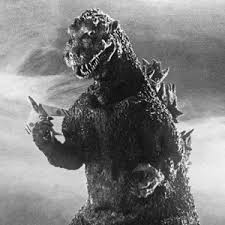
The original Godzilla 1954
So, my earlier comment about Godzilla being “just about the nuclear bomb” is right and wrong. The movie was shaped by the creators who lived in the only country to have experienced a nuclear bomb attack but the situation at the time was much more complex. The United States after World War 2 had taken possession of an island from Japan called the Bikini Atoll and after forcibly removing all the inhabitants started using it as a place to test hydrogen bombs. The U.S. dropped over 23 bombs on the island group. The most famous is the Castle Bravo test which occurred just a few months before the film was made and resulted in a Japanese fishing ship called the Lucky Dragon #5 being exposed to radiation and fallout. Godzilla starts off with a ship seeing a blinding flash of light and then being destroyed as a clear homage to the events. The filmmakers clearly felt that the bombing was not a one-time thing that had happened to them but that nuclear weapons were something that was going to threaten their lives for an exceptionally long time. The other item that expresses this very explicitly is some thing that was largely scrubbed from the American version of the film, the casualties. The victims of Godzilla were far more then just the people endangered from his catastrophic attack on Tokyo, Godzilla’s radiation persisted and caused sickness and death even after he had returned to the sea. This is especially horrific when you take into account the Japanese attitude towards hibakusha, or bomb survivors. There were wildly held beliefs at the time that radiation damage could be passed onto the children of survivors, and they were dangerous to be around other people long after having been exposed. These were all things that the public were discussing and trying to find a way to deal them is one of the reasons that Godzilla was so successful and remained an important part of the Japanese film library.
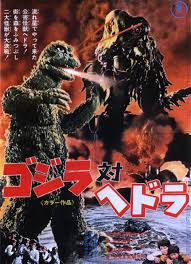
Godzilla vs Hedorah (American title Godzilla vs the smog monster)
Okay so its time to talk about the jet powered flying Godzilla in the room. Godzilla vs Hedorah is looked upon with disdain by a lot of the Godzilla fan community and to be honest it’s an odd duck in the filmography. The film helmed by Yoshimitsu Banno was his first as a director and Toho was facing a lot of financial issues. Godzilla films were still profitable, but they had become mostly something aimed and children. Banno wanted to take Godzilla back to its days of cultural relevance and make a film that handled a more political topic. Japan was in the midst of facing the cost of rapid industrialization with several sweeping health issues being linked to pollution and dumping of toxic wastes into the water supplies. Banno wanted to bring this greater attention and hopefully have people discussing Godzilla that same way they had after his first outing. The results were… different. I have to be honest I had seen the movie as a kid and was kind of weirded out and did not connect with it in any way so much, so I had never watched it again until I started working on this piece. The movie was still pretty weird and had a lot of shortcomings but was better than I remembered it. Hedorah, while being from outer space, is literally a monster that is comprised of sludge and smog and consumes the same to sate its appetite. Its primary forms of attack on the city are spewing sulfuric acid and producing clouds of toxic vapors. There was a particular damaging syndrome that was sweeping Japan in the early seventies called Yokkaichi Asthma which were cases of chronic obstructive pulmonary disease, chronic bronchitis, pulmonary emphysema, and bronchial asthma that was the result of sulfur dioxide emissions. The Japanese industrial companies had fought for years to keep them from being connected to the health issues and it was only in the same year that Hedorah came out that Japan created an environmental protection agency. Hedorah was not as successful as the first Godzilla in promoting its issues, part of that was the lack of support part of that was due to the choices Banno made which included adding animated sections, a reoccurring environmental pop song throughout and even Godzilla himself giving humanity the side eye. Then there was the scene where Godzilla took to the air by using his atomic breath as a jet engine which may not have added to the message at least made sure everyone remembered the movie regardless of its shortcomings.
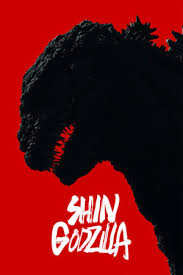
Shin Godzilla
In the spring of 2011, there was a earthquake in the Tōhoku region of Japan that resulted in a Tsunami that damaged almost the entire area and resulted in the failing and ultimate meltdown of the Fukushima nuclear plant. The event was a natural disaster that was exasperated by the failing of the government in safety and oversight, most noticeably failures in risk assessment and evacuation planning. There were also issues with communications and decisions that endangered people and shook the trust of the nation. In this context looking at Shin Godzilla we see clear parallels. Shin Godzilla has three district forms as it adapts to life on land, each one echoing the type of damage from the initial earthquake that started the disaster, to the Tsunami that followed and finishing by embodying the radiation and devastation that would have resulted if the plant had melted down. Shin Godzilla operates in a Japan that has never seen Godzilla before and the government bureaucracies and government react the way they did after the Fukushima accident with people refusing to make decisions, keep the public notified and failing to take responsibility due to the dangers of making a mistake. This results in untold damage and chaos while the prime minister hosts press conferences downplaying the danger. One striking difference that I find interesting is that the movie steers toward a hopeful trend at the end with lower-level bureaucrats and experts stepping up to come up with a plan to stop Godzilla.
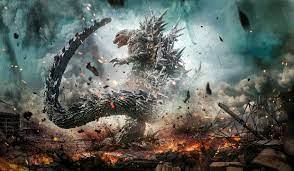
Godzilla Minus one
The most recent Godzilla movie is an interesting case to ponder, at first glance it evokes a lot of the imagery of the first Godzilla. If you had only seen the trailer, you could be forgiven for thinking it might have been a straight up remake but the film, while being about some of the same issues, treads a lot of new ground. The film begins at the closing days of World War 2, and we meet a young pilot, Shikishima, who cannot bring himself to engage in a kamikaze attack when he feels the war has already been lost. He lands on an Isolated military outpost where he encounters Godzilla for the first time. The monster at this point still an “normal” sized dinosaur rampages through the camping killing everyone except Shikishima and the lead mechanic Tachibana which leads into one of the two major themes of the movie Survivor’s guilt. During the encounter with Godzilla Shikishima fails to turn his airplanes guns on the beast and Tachibana blames the deaths on him for his lack of action. This happens again when he returns home, and his neighbor blames him and others like him for failed to do their duty for Japan losing the war.
Shikishima is haunted by his memories and his guilt but struggles to build a life, taking in a woman and child and creating a family. He gets a job cleaning up mines left behind from the war and there he encounters Godzilla again and the second of the main themes, community action. Godzilla has been severely mutated from his encounter with a US military atomic bomb test and has been destroying ships on his way to Tokyo. America who forbidden the Japanese to have anything other a defense based armed force, also refuse to step in and handle the threat citing dangers of escalating the cold war with the Soviets. This leads Shikishima, and the crew of his mine destroying craft to be tasked with trying to slow down Godzilla. A job they are horribly unsuited for. The message is laid out the regular people of Japan are not going to be receiving aid from the American or even their own government.
Shikishima and his crew barely survive their first encounter and return home but are swiftly followed by Godzilla who advances onto the mainland leaving a swath of destruction in its wake. The government again fails to act and calls upon retired naval officers to deal with the threat of Godzilla by only providing them with a group of unarmed decommissioned ships. Shikishima is recruited to fly cover over the mission, but the people involved have little hope and feel they are being sent out to die again like in the last days of the war. Kenji Noda, the architect of plan to stop Godzilla, tells the team that this time it is different. They are not sacrificing themselves for a lost cause but volunteering to fight for the hope they will survive. I know I indicated there would be spoilers, but I do not want to provide the ending here, I just feel that everyone should go watch the movie (and catch it in black and white if possible.}
Takashi Yamazaki, the writer, and director of minus one, has gone on record about how he was writing the script during the first months of Covid and how a substantial portion of the population had felt like they had been abandoned by the lack of a response from the government. In an interview with the Verge, he said in those early first few weeks, we had the sense of, “Hey, the government’s not doing anything. This is going to be up to us.” This is reflected in how the people have to rise up together to safeguard each other and how by fighting to protect the things you care about you can overcome your trauma and move on.
 Paper Phoenix ink